
I love winter botanizing and observing the stark, beautiful remains of plants against a white landscape. Elecampane (Inula helenium) is an excellent candidate for observation because the tall, stout stems and fuzzy leaves persist most of the winter, well above even the deepest snow, as do the receptacles of the plant’s inflorescences.
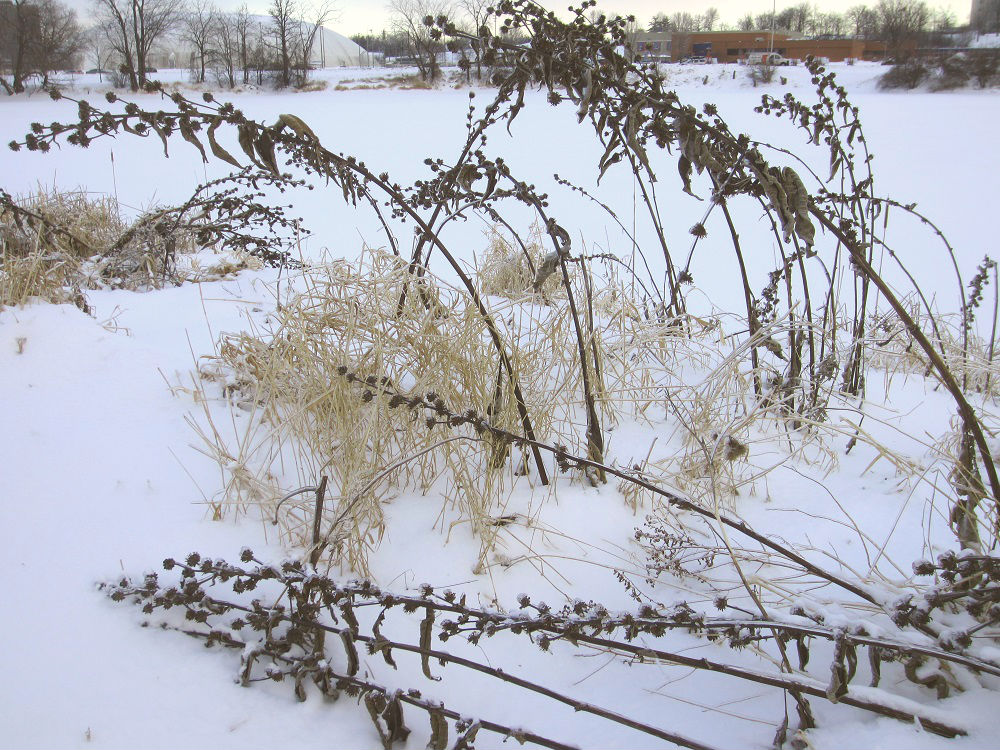
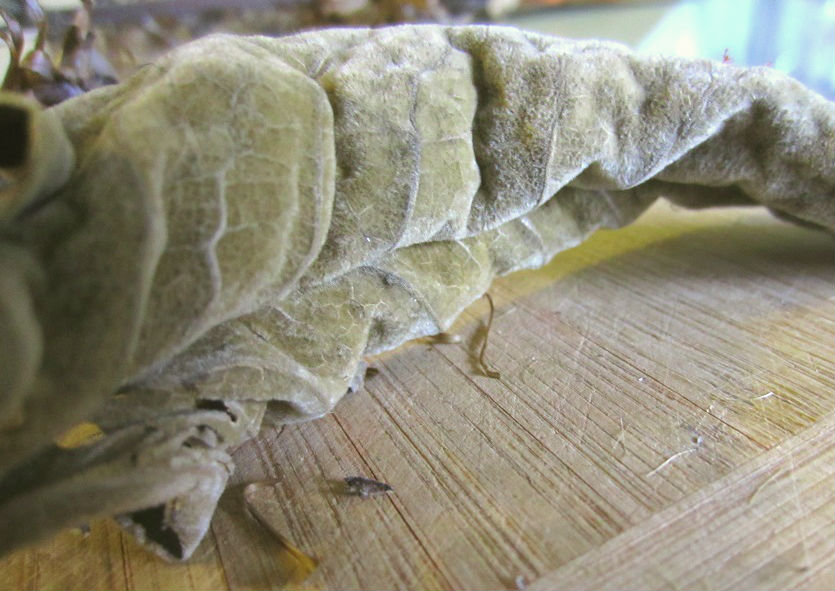
Elecampane is a wonderful plant to experience tactilely, especially for kids. The large, simple, alternate leaves, though brittle and shrivelled, should still feel soft and velvety on the undersides. Notice how the remaining leaves on the upper portion of the stem are sessile. This means the leaves lack a petiole (leaf stalk) and clasp directly to the stem of the plant. The thick, round stem is also covered in fine hairs, but these may wear off over the winter.
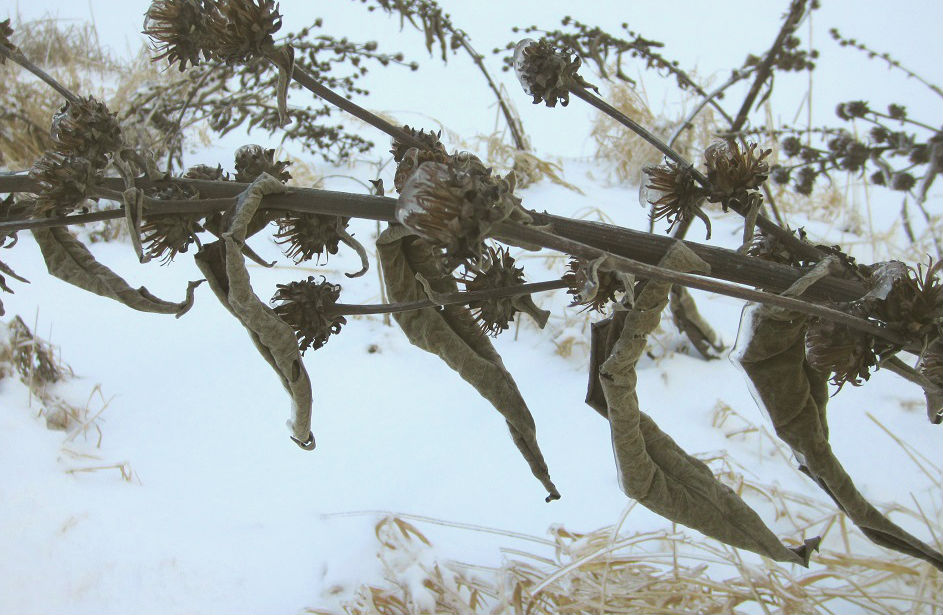
As a member of the Asteraceae family, the composite flowers have some unique features, which are easily observed in Elecampane, even though the flowers have long since died. Involucral bracts are modified leaves (not to be confused with sepals) and ring the receptacle. Here we can see the outer bracts which are broad, curled under and covered in dense, short hairs. The inner bracts are long, narrow and glabrous (smooth and hairless).
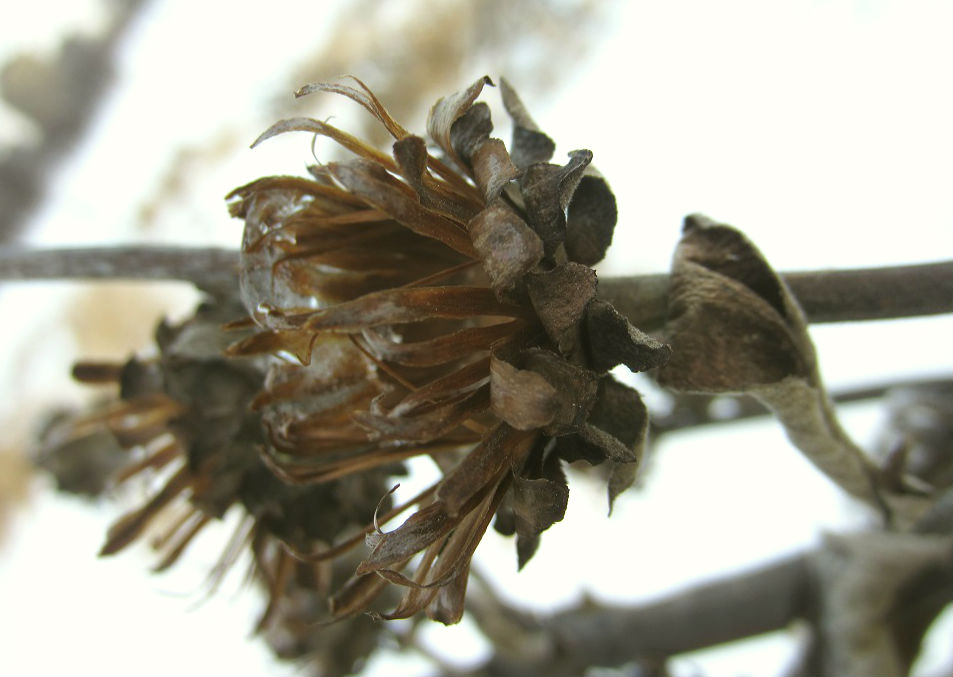
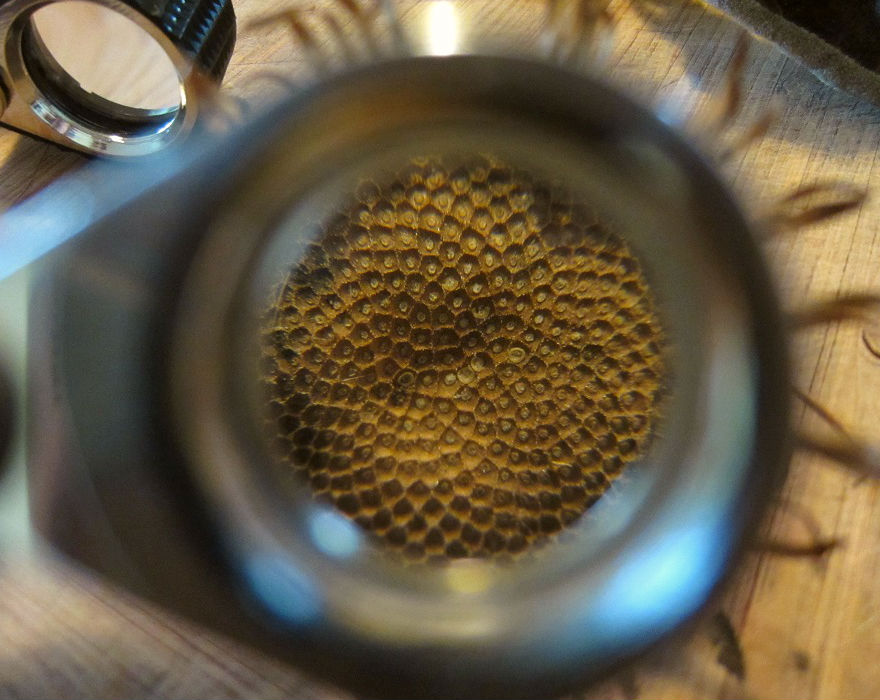
Looking at the receptacle you can see the pits in the disk that held the achenes (dry fruits which contain a single seed).

Here is a close up view of the receptacle through a 20x loupe.
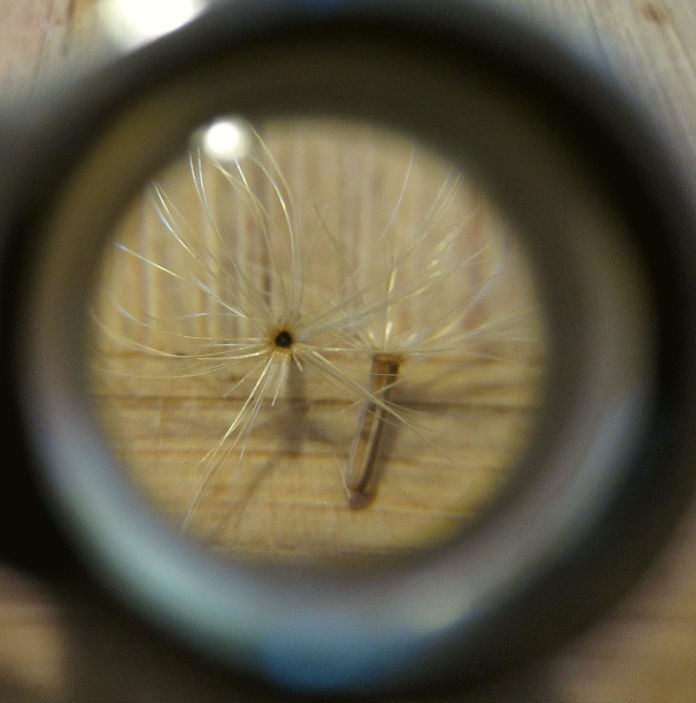
Most of the seeds had dispersed, but these two found their way home with me. These achenes are long and four sided and attached to fine pappus hairs.
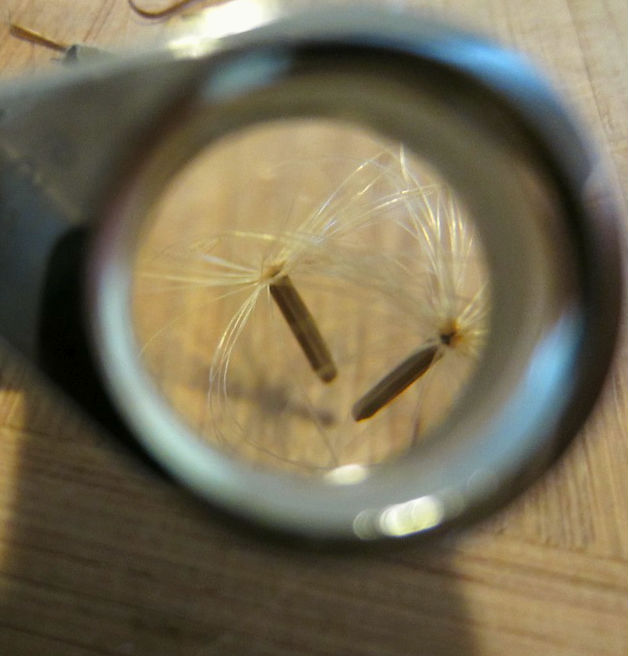
These hairs are what allows the seeds to be carried long distances on the wind, an excellent reproductive strategy!
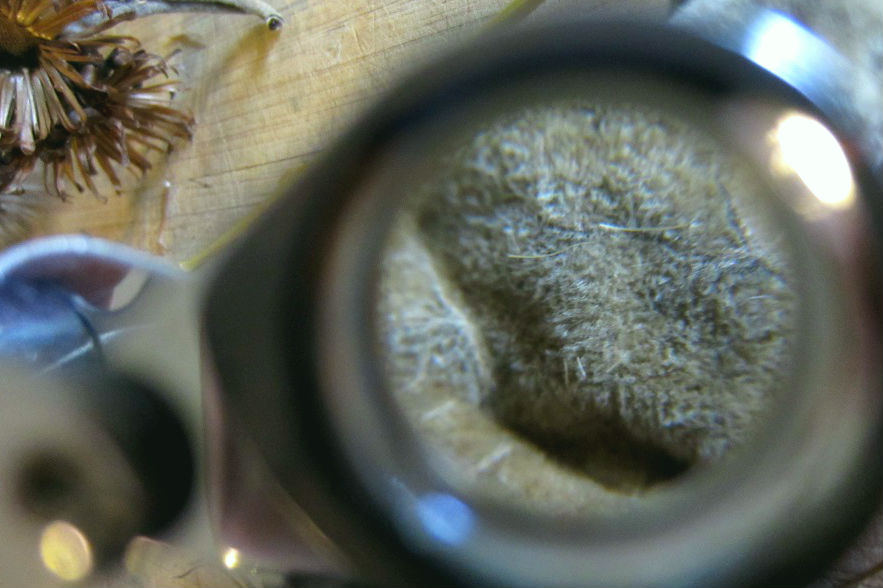
Here you can see the woolly-velvety texture on the undersides of the leaves.
And again through the loupe.
Elecampane is native to Europe, but has naturalised through much of Eastern and Western North America. In grows in disturbed areas, fields and roadsides, especially in moist soil. Occasionally it grows in large patches pictured here, but often you will find single plants spread over a large area. I frequently see it at the edges of wooded areas. In the Ottawa area, look for it on the Carleton campus and in Brewer Park by the river.
Be sure to keep an eye out for this beautiful, interesting plant on your next winter walk and enjoy exploring and getting to know it!
Be sure to keep an eye out for this beautiful, interesting plant on your next winter walk and enjoy exploring and getting to know it!
 RSS Feed